



The 40th Anniversary of the 1985 Floods
Posted by Admin.November 11th, 2025
By Samantha Wade, WVRHC Graduate Assistant
During the hurricane season of 1985, a tropical cyclone called Hurricane Juan moved along the coast of Louisiana and Florida before moving north. Spawning from Hurricane Juan, another storm system brought more rain. The already saturated soil could not absorb more water when the storm stalled over areas of West Virginia.
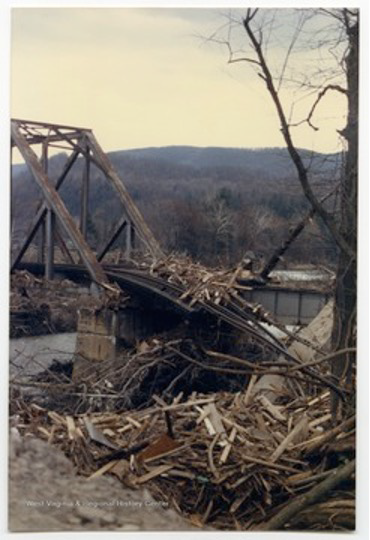
In late October of 1985, these storms resulted in extreme flooding in West Virginia, as most of the state’s urban areas are along flood plains. River gauge stations recorded 100-year flood events along the Potomac and Monongahela river basins and the 4th and 5th flood plains saw flash flooding, washing away topsoil and trees. Soon, over 13,000 homes and businesses were damaged or destroyed. In some towns, flooding rose to the second story of buildings.
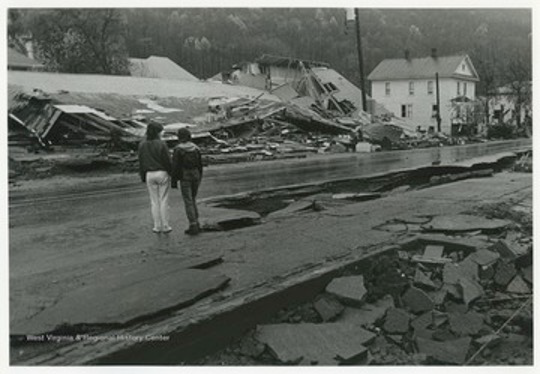
In Weston, the incomplete Stonewall Jackson Dam spared a large amount of flooding other towns saw. Reports came in that the dam had broken, and residents began preparing for the worst. Thankfully, the dam hadn’t broken. While the town still sustained damage from the floods, the dam helped reduce it. It’s estimated the flooding resulted in $700 million in damage and 38 deaths across the state.
Out of the 55 counties in West Virginia, President Ronald Reagan declared 29 disaster areas. Boil-water advisories were put out, and several of these areas had no access to clean water. In what are now known as the “Election Day Floods” or “Killer Floods,” several rivers reached 10 to 15 feet above the flood stage.
Meanwhile, Rowlesburg, Glenville, Marlinton, were some of the towns hit the hardest, and Pendelton and Grant counties saw the largest loss of life. In total, rising water and mudslides blocked 800 roads and bridges and isolated communities.
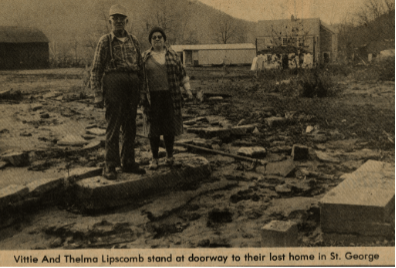
In response, WVU mobilized resources and the Office of Institutional Advance worked to provide relief. The University gave employees notice of the ability to take time off to volunteer November 11-15 and at least 16 full- and part-time staff and faculty from WVU Libraries volunteered to provide flood relief. During this disaster, there was a clear sense of community, as people rallied to help in any way they could.
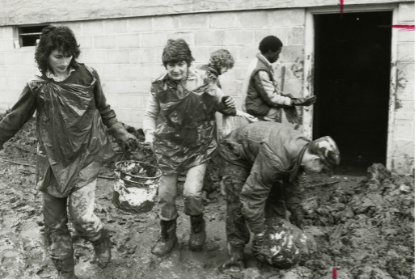
After the flooding, several features were implemented to mitigate future flooding, including levees, river monitoring, and more communication towers. 40 years later, flooding like that of the 1985 Floods has not occurred again in West Virginia. People still remember the floods as one of the state’s most tragic events, but they also remember how people came from all over the state to help one another. That kind of support is not easily forgotten